Comparing JP vs. Competitors: Top Automotive Industries Dynamic Balancing in China
SHANGHAI, SHANGHAI, CHINA, August 25, 2026 /EINPresswire.com/ -- The global automotive sector is undergoing a profound structural transformation, driven largely by the rapid adoption of electric vehicles and the relentless pursuit of fuel efficiency in traditional internal combustion engines. Central to this evolution is the concept of NVH (Noise, Vibration, and Harshness) control, where even the slightest mechanical oscillation can compromise vehicle longevity and passenger comfort. In this context, Top Automotive Industries Dynamic Balancing in China has become a critical benchmark for manufacturing excellence. Achieving sub-micron precision is no longer a luxury but a fundamental requirement for Tier 1 suppliers. As engineers seek to eliminate parasitic vibrations in high-speed rotating components, the distinction between standard balancing equipment and high-end automated solutions becomes the deciding factor in production quality and market competitiveness.
Engineering the Edge: JP Smart Ecosystem vs. Generic PLC Solutions
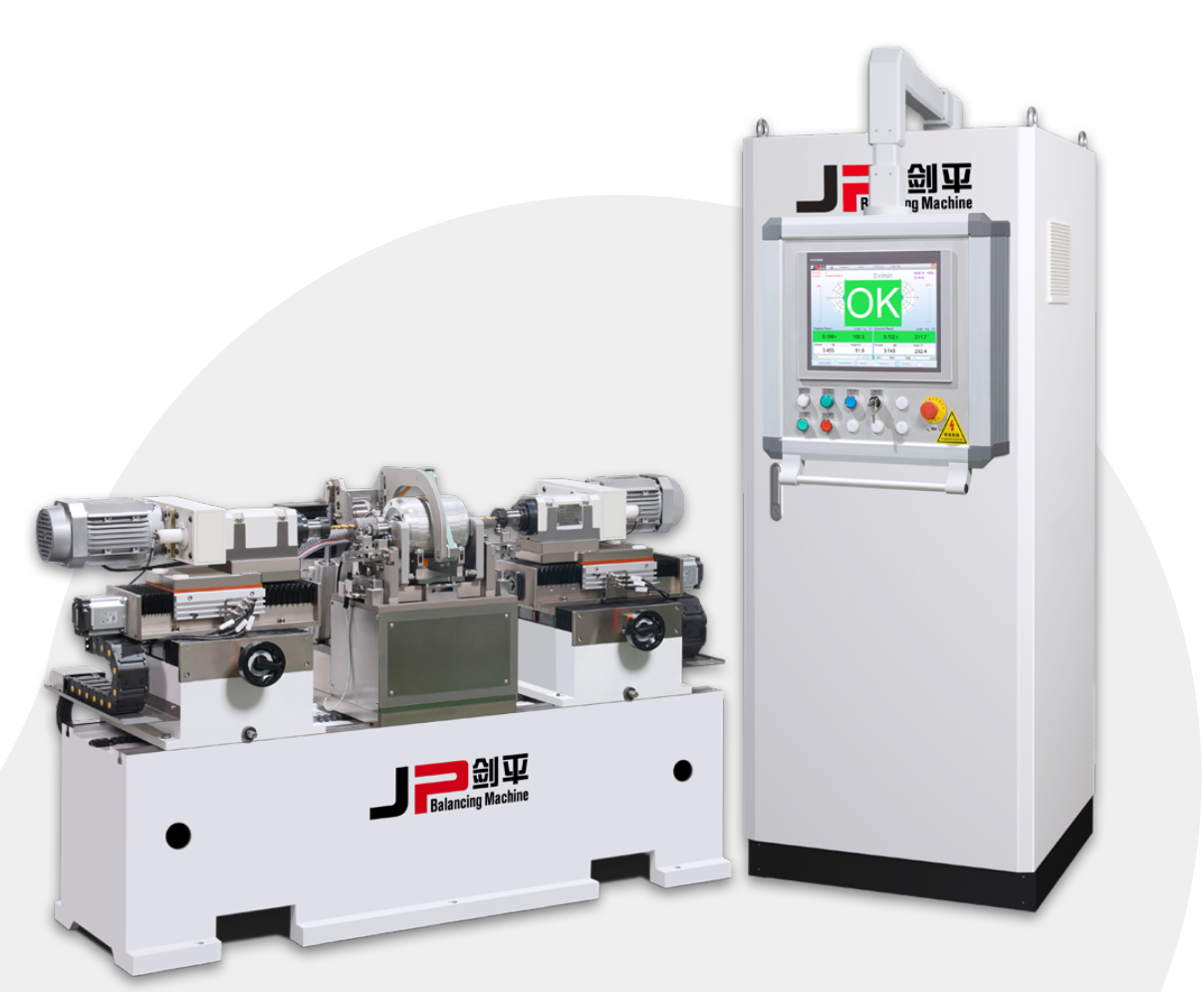
Precision in dynamic balancing fundamentally relies on the synergy between mechanical rigidity and algorithmic intelligence. Many domestic manufacturers in the Chinese market utilize generic Programmable Logic Controllers (PLC) to manage measurement sequences. While functional for basic tasks, these systems often lack the processing power required for the complex signal filtering necessary in high-volume automotive production. In contrast, Shanghai Jianping Dynamic Balancing Machine Manufacturing Co., Ltd develops proprietary measurement ecosystems that operate on advanced industrial computing platforms. This approach allows for a significantly higher signal-to-noise ratio, enabling the detection of micro-unbalances that standard sensors might miss. By isolating the true vibration data from ambient shop-floor noise, the equipment ensures that components meet the stringent ISO 1940 standards required for modern drivetrain assemblies.
Mastering the EV Evolution: High-RPM Stability for Motor Rotors
The shift toward electrification has introduced new challenges, particularly regarding the rotational speeds of motor rotors. Electric vehicle (EV) motors often operate at speeds exceeding 15,000 RPM, where centrifugal forces amplify even the smallest mass eccentricity. JP addresses this challenge through a multi-station automated architecture rather than a single-machine approach.
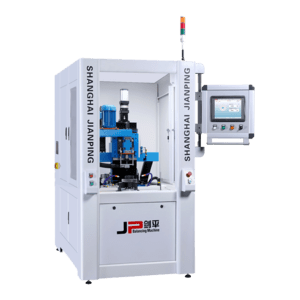
The core platform — the EV Motor Automatic Balancing Machine — handles measurement, orientation, and correction through precise drilling or milling without human intervention. For higher-throughput production environments, the Two-Station End Surface Drilling & Milling Automatic Balancer and the Four-Station End Surface Drilling & Milling Automatic Balancer extend this logic across parallel workstations, enabling synchronized batch production while preserving per-unit precision. Additional configurations within this family handle specialized scenarios including shaftless EV motors and rotors requiring internal-support fixturing.
While many competitors still offer semi-automatic systems that require manual loading or simplified correction cycles, JP's EV motor balancer family achieves a residual unbalance amount of ≤ 0.1 g·mm/kg across all configurations. Such precision ensures that the motor operates silently and efficiently over its entire lifecycle — a factor that directly impacts the vehicle's driving range and consumer perception. Modular design also allows seamless extension into MES integration, automatic loading, and multi-station expansion as production volumes scale.
Drivetrain Precision Barrier: Differential Cases, Planet Carriers, Sun Gears, and Flanges
Beyond the motor, the drivetrain involves a complex array of components whose irregular geometries make traditional balancing difficult. JP addresses this through a dedicated product family for each component category rather than forcing a one-size-fits-all solution.
For differential cases — heavy, rotationally critical components where slight imbalance translates directly into driveline vibration — JP offers the Differential Case Axial Drilling Automatic Balancer as the foundational platform. Higher-volume production environments benefit from the Two-station Differential Case Automatic Balancer and the Multi-station Differential Case Automatic Balancer, which extend the same engineering logic across parallel workstations.
For planet carriers and sun gears — components within reducer and transmission assemblies — JP provides specialized configurations. The Planet Carrier Vertical Drilling Automatic Balancer and the Planet Carrier Vertical Radial Drilling Automatic Balancer handle the dual-axis correction requirements of these complex assemblies. The Automobile Reducer Sun Gear Punching Automatic Balancer applies a punching-based correction method specifically optimized for sun gear geometry, with extended two-station configurations available for higher throughput.
Flange components require their own correction toolkit due to varying mounting geometries. JP covers this need through three distinct platforms: the Flange Vertical Drilling Automatic Balancer, the Vertical Radial Drilling Automatic Balancer, and the Flange Vertical Milling Automatic Balancer — allowing manufacturers to select the correction method best suited to their specific flange design.
Standard market offerings often struggle with "changeover friction" — the time required to recalibrate a machine for a different part. JP's modular hardware allows for rapid changeovers in under 15 minutes, enabling manufacturers to maintain high utilization rates even when producing small batches of diverse drivetrain components. The integrated auto-positioning and multi-axis correction technology ensure that the geometric integrity of the part remains intact after mass correction, preventing structural weaknesses that can occur from improper drilling depths.
Crankshaft Engineering: The Heart of Internal Combustion Powertrains
While the industry pivots toward electrification, internal combustion engine production remains a massive global market, and crankshaft balancing represents one of its most technically demanding categories. Crankshafts present unique challenges: variable cylinder configurations (single, twin, three, four, and beyond), long rotational axes, and tight tolerance requirements that directly affect engine NVH performance.
JP addresses this complexity through a tiered crankshaft balancer family. The Single-station Crankshaft Automatic Balancer handles standard production volumes with full automation across measurement, positioning, drilling correction, and re-verification. For higher throughput, the Two-station Crankshaft Automatic Balancer doubles parallel processing capacity. When standard configurations cannot meet specific cylinder layouts or production constraints, the Crankshaft Customized Dynamic Balancer is engineered around individual customer requirements. For smaller production volumes or specialty applications, the Crankshaft Manual Balancer preserves measurement accuracy while accommodating lower-volume workflows.
This tiered approach reflects a market reality that lower-end competitors often ignore: not every crankshaft production line needs the same level of automation. JP's product matrix allows manufacturers to match equipment investment to actual production scale, rather than forcing capital expenditure beyond what the operation requires.
The "Weld-to-Balance" Logic: Industrial-Grade Reliability for Drive Shafts
The drive shaft represents another critical area where balancing technology defines performance. As the component responsible for transferring torque from the engine or motor to the wheels, any unbalance leads to debilitating chassis vibrations. The manufacturing process is uniquely complex because correction often requires attaching balance weights through welding — an operation that introduces its own variability if performed manually.
High-tier solutions integrate the measurement and welding processes into a single automated loop. The Drive Shaft Automatic Welding Balancing Machine — JP's A1WH2-100 platform — handles two-section and three-section shafts with high repeatability, using a universal joint drive system and high-torque motor configuration to transfer rotational power without introducing measurement artifacts. The automation of the welding compensation process eliminates the variability associated with manual spot welding.
For applications where welding is performed separately from measurement, JP offers hard-bearing measurement platforms across multiple shaft configurations. The PHC100 Drive Shaft Balancing Machine serves as the foundational measurement platform, with the Two-Piece Drive Shaft Balancer and the Three-Piece Drive Shaft Balancing Machine addressing the specific dynamic profiles of multi-section shafts. The hard-bearing design avoids the start-stop vibration issues common to soft-support systems, while high-sensitivity sensors maintain measurement linearity across the full operational range. This level of consistency distinguishes industrial-grade balancing partners from budget-focused alternatives that compromise on either measurement stability or correction repeatability.
Camshafts, Balance Shafts, and Gear Shafts: Precision for Rotational Assemblies
Beyond the major drivetrain categories sit a group of high-precision shaft components — camshafts, balance shafts, eccentric shafts, and gear shafts — that require their own specialized balancing approaches. These components are typically long, slender, and feature multiple correction surfaces, making them poorly suited to general-purpose balancing equipment.
For camshafts, balance shafts, and eccentric shafts, JP offers two complementary correction approaches within a unified product family. The Balance Shaft Eccentric Shaft Side Drilling Automatic Balancer A1LZ2 applies horizontal-drilling correction that preserves the axial integrity of these long-aspect-ratio components, while the A1LZ1 Balance Shaft Vertical Drilling Automatic Balancing Machine handles applications where vertical-drilling geometry is preferred. Both platforms fully automate the cycle — from balance measurement and angular positioning through material removal and re-verification — and connect directly to production lines for batch processing. The modular structure supports robotic loading and unloading for high-volume production, while pneumatic quick-clamp fixtures keep workpieces securely positioned throughout each cycle.
For gear shafts, JP provides a tiered solution scaling from standalone stations to fully integrated lines. The Gear Shaft Two-station Automatic Balancer completes balancing and weight removal in a single integrated cycle, with a single operator achieving rapid cycle times and high first-pass yield. The platform supports multiple correction methods — milling, end-face drilling, and outer-circumference drilling — and product changeover is simplified to swing-frame repositioning and power-head angle adjustment. The A2WZ1-5 Gear Shaft Horizontal Drilling Automatic Balancing Machine extends this logic with a horizontal-drilling configuration for specific shaft geometries, while the W2WZ1&2-1.6 Automatic Gear Shaft Assembly Line Balancing Machine embeds the balancer directly into assembly-line workflows for per-unit balancing within high-volume production.
The technical depth across these shaft categories reflects a market reality: competitors often handle camshafts and gear shafts as afterthoughts within general-purpose product lines, while JP treats each shaft category as a distinct engineering challenge with its own optimized platform.
Smart Manufacturing and Global Moat: 100% Data Traceability
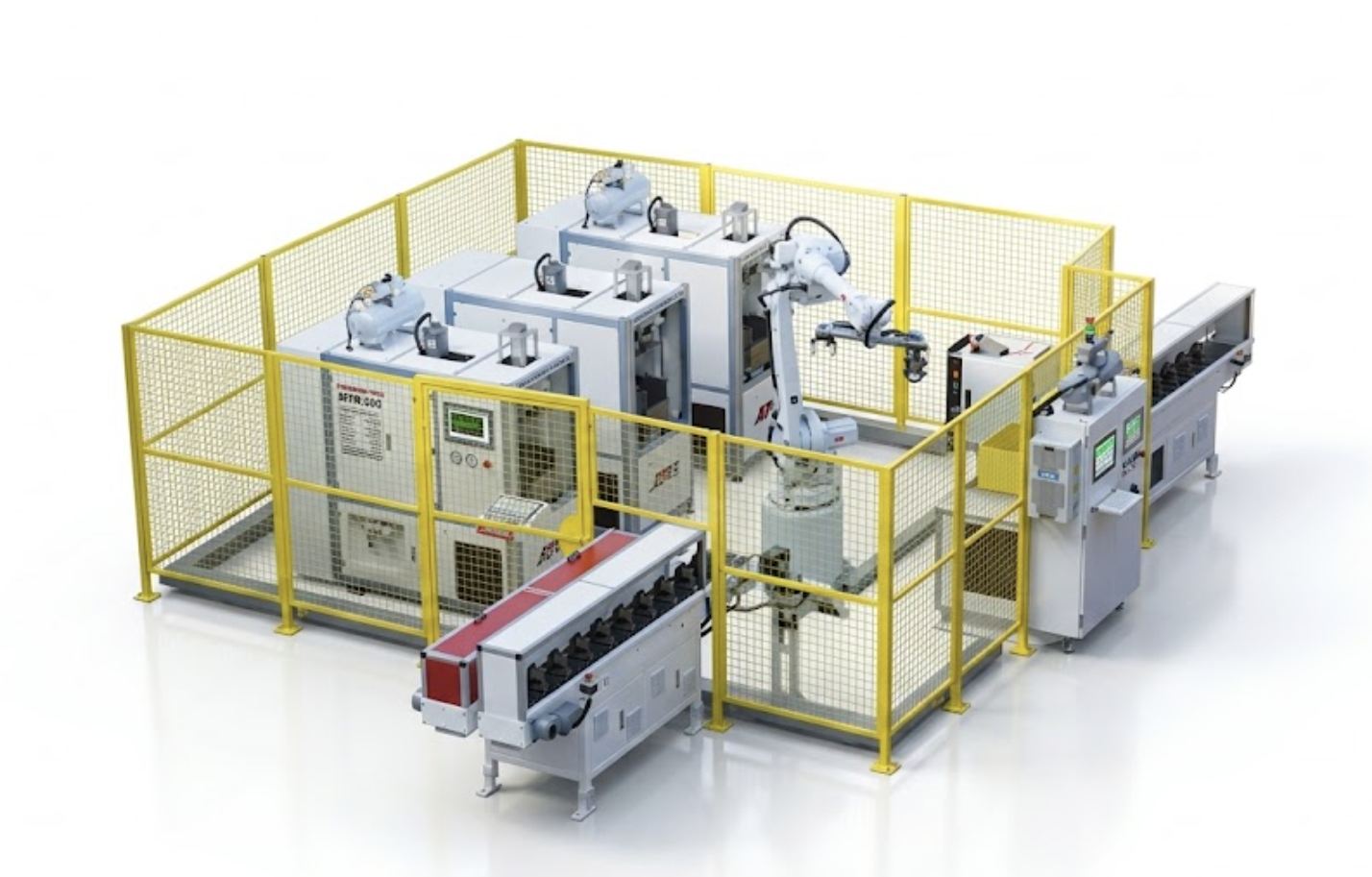
Smart manufacturing has moved beyond simple automation to encompass full data transparency. In the current regulatory environment, automotive suppliers must provide comprehensive traceability for every safety-critical component. The JPSmart system, a Windows-based software suite, facilitates this by recording every measurement and correction step. This data can be exported directly to a factory's Manufacturing Execution System (MES), allowing for real-time monitoring of production quality and CPK values. Many domestic competitors provide basic digital readouts, but they often lack the sophisticated after-sales service and software depth required for 100 percent data traceability. For a Tier 1 supplier, this capability is essential for passing rigorous audits from global automotive brands. It transforms the balancing machine from a standalone tool into a vital node within the digital factory ecosystem.
Authority and Laboratory Excellence: The First CNAS Accredited Manufacturer
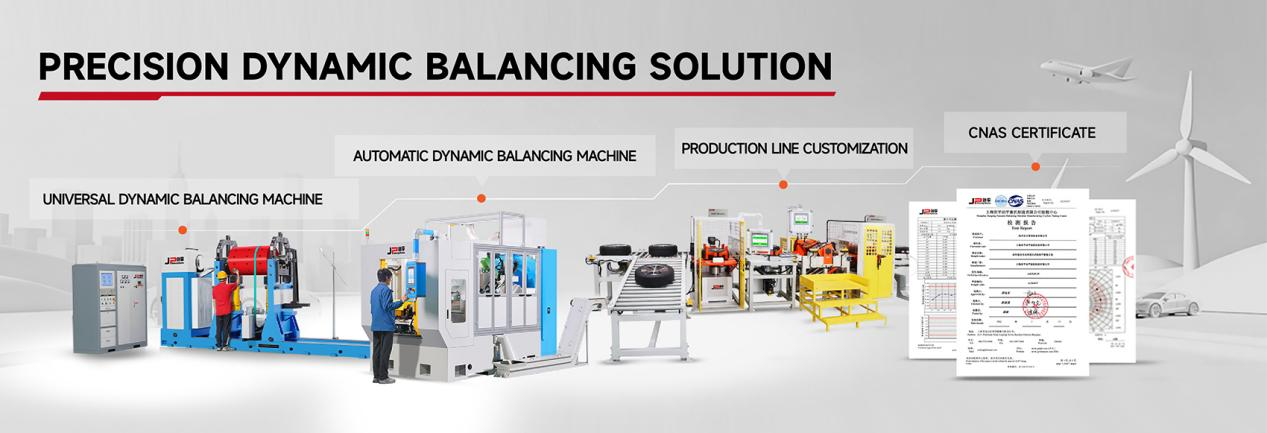
The authority of a balancing machine manufacturer is further validated by its technical certifications and laboratory credentials. Shanghai Jianping is the first balancing machine manufacturer in China to receive accreditation from the China National Accreditation Service for Conformity Assessment (CNAS). This certification implies that the measurement results produced by the equipment are recognized internationally, providing an additional layer of assurance for export-oriented manufacturers. While many smaller players in the industry focus on price competition, the long-term value of a machine lies in its uptime and the accuracy of its results. Access to 24/7 technical support and a global network of service centers ensures that production lines remain operational, a critical consideration for high-volume automotive plants where even an hour of downtime can result in significant financial losses.
Conclusion
In conclusion, the landscape of dynamic balancing in the automotive sector is no longer defined merely by the ability to spin a part and find its heavy spot. It is defined by the integration of high-speed automation, sub-micron precision, and digital traceability. As vehicles become more sophisticated, the demands on Tier 1 and Tier 2 suppliers will only intensify. Companies like JP — through dedicated product families spanning EV motor rotors, differential cases, planet carriers, sun gears, flanges, crankshafts, drive shafts, camshafts, balance shafts, and gear shafts — continue to push the boundaries of what is possible in rotational accuracy. By choosing a partner that prioritizes technical depth and verified performance across the entire powertrain matrix, manufacturers can secure their position in the increasingly competitive global automotive market.
For more information regarding advanced balancing solutions, visit the official website: https://www.jp-balancer.com/.
Engineering the Edge: JP Smart Ecosystem vs. Generic PLC Solutions
Precision in dynamic balancing fundamentally relies on the synergy between mechanical rigidity and algorithmic intelligence. Many domestic manufacturers in the Chinese market utilize generic Programmable Logic Controllers (PLC) to manage measurement sequences. While functional for basic tasks, these systems often lack the processing power required for the complex signal filtering necessary in high-volume automotive production. In contrast, Shanghai Jianping Dynamic Balancing Machine Manufacturing Co., Ltd develops proprietary measurement ecosystems that operate on advanced industrial computing platforms. This approach allows for a significantly higher signal-to-noise ratio, enabling the detection of micro-unbalances that standard sensors might miss. By isolating the true vibration data from ambient shop-floor noise, the equipment ensures that components meet the stringent ISO 1940 standards required for modern drivetrain assemblies.
Mastering the EV Evolution: High-RPM Stability for Motor Rotors
The shift toward electrification has introduced new challenges, particularly regarding the rotational speeds of motor rotors. Electric vehicle (EV) motors often operate at speeds exceeding 15,000 RPM, where centrifugal forces amplify even the smallest mass eccentricity. JP addresses this challenge through a multi-station automated architecture rather than a single-machine approach.
The core platform — the EV Motor Automatic Balancing Machine — handles measurement, orientation, and correction through precise drilling or milling without human intervention. For higher-throughput production environments, the Two-Station End Surface Drilling & Milling Automatic Balancer and the Four-Station End Surface Drilling & Milling Automatic Balancer extend this logic across parallel workstations, enabling synchronized batch production while preserving per-unit precision. Additional configurations within this family handle specialized scenarios including shaftless EV motors and rotors requiring internal-support fixturing.
While many competitors still offer semi-automatic systems that require manual loading or simplified correction cycles, JP's EV motor balancer family achieves a residual unbalance amount of ≤ 0.1 g·mm/kg across all configurations. Such precision ensures that the motor operates silently and efficiently over its entire lifecycle — a factor that directly impacts the vehicle's driving range and consumer perception. Modular design also allows seamless extension into MES integration, automatic loading, and multi-station expansion as production volumes scale.
Drivetrain Precision Barrier: Differential Cases, Planet Carriers, Sun Gears, and Flanges
Beyond the motor, the drivetrain involves a complex array of components whose irregular geometries make traditional balancing difficult. JP addresses this through a dedicated product family for each component category rather than forcing a one-size-fits-all solution.
For differential cases — heavy, rotationally critical components where slight imbalance translates directly into driveline vibration — JP offers the Differential Case Axial Drilling Automatic Balancer as the foundational platform. Higher-volume production environments benefit from the Two-station Differential Case Automatic Balancer and the Multi-station Differential Case Automatic Balancer, which extend the same engineering logic across parallel workstations.
For planet carriers and sun gears — components within reducer and transmission assemblies — JP provides specialized configurations. The Planet Carrier Vertical Drilling Automatic Balancer and the Planet Carrier Vertical Radial Drilling Automatic Balancer handle the dual-axis correction requirements of these complex assemblies. The Automobile Reducer Sun Gear Punching Automatic Balancer applies a punching-based correction method specifically optimized for sun gear geometry, with extended two-station configurations available for higher throughput.
Flange components require their own correction toolkit due to varying mounting geometries. JP covers this need through three distinct platforms: the Flange Vertical Drilling Automatic Balancer, the Vertical Radial Drilling Automatic Balancer, and the Flange Vertical Milling Automatic Balancer — allowing manufacturers to select the correction method best suited to their specific flange design.
Standard market offerings often struggle with "changeover friction" — the time required to recalibrate a machine for a different part. JP's modular hardware allows for rapid changeovers in under 15 minutes, enabling manufacturers to maintain high utilization rates even when producing small batches of diverse drivetrain components. The integrated auto-positioning and multi-axis correction technology ensure that the geometric integrity of the part remains intact after mass correction, preventing structural weaknesses that can occur from improper drilling depths.
Crankshaft Engineering: The Heart of Internal Combustion Powertrains
While the industry pivots toward electrification, internal combustion engine production remains a massive global market, and crankshaft balancing represents one of its most technically demanding categories. Crankshafts present unique challenges: variable cylinder configurations (single, twin, three, four, and beyond), long rotational axes, and tight tolerance requirements that directly affect engine NVH performance.
JP addresses this complexity through a tiered crankshaft balancer family. The Single-station Crankshaft Automatic Balancer handles standard production volumes with full automation across measurement, positioning, drilling correction, and re-verification. For higher throughput, the Two-station Crankshaft Automatic Balancer doubles parallel processing capacity. When standard configurations cannot meet specific cylinder layouts or production constraints, the Crankshaft Customized Dynamic Balancer is engineered around individual customer requirements. For smaller production volumes or specialty applications, the Crankshaft Manual Balancer preserves measurement accuracy while accommodating lower-volume workflows.
This tiered approach reflects a market reality that lower-end competitors often ignore: not every crankshaft production line needs the same level of automation. JP's product matrix allows manufacturers to match equipment investment to actual production scale, rather than forcing capital expenditure beyond what the operation requires.
The "Weld-to-Balance" Logic: Industrial-Grade Reliability for Drive Shafts
The drive shaft represents another critical area where balancing technology defines performance. As the component responsible for transferring torque from the engine or motor to the wheels, any unbalance leads to debilitating chassis vibrations. The manufacturing process is uniquely complex because correction often requires attaching balance weights through welding — an operation that introduces its own variability if performed manually.
High-tier solutions integrate the measurement and welding processes into a single automated loop. The Drive Shaft Automatic Welding Balancing Machine — JP's A1WH2-100 platform — handles two-section and three-section shafts with high repeatability, using a universal joint drive system and high-torque motor configuration to transfer rotational power without introducing measurement artifacts. The automation of the welding compensation process eliminates the variability associated with manual spot welding.
For applications where welding is performed separately from measurement, JP offers hard-bearing measurement platforms across multiple shaft configurations. The PHC100 Drive Shaft Balancing Machine serves as the foundational measurement platform, with the Two-Piece Drive Shaft Balancer and the Three-Piece Drive Shaft Balancing Machine addressing the specific dynamic profiles of multi-section shafts. The hard-bearing design avoids the start-stop vibration issues common to soft-support systems, while high-sensitivity sensors maintain measurement linearity across the full operational range. This level of consistency distinguishes industrial-grade balancing partners from budget-focused alternatives that compromise on either measurement stability or correction repeatability.
Camshafts, Balance Shafts, and Gear Shafts: Precision for Rotational Assemblies
Beyond the major drivetrain categories sit a group of high-precision shaft components — camshafts, balance shafts, eccentric shafts, and gear shafts — that require their own specialized balancing approaches. These components are typically long, slender, and feature multiple correction surfaces, making them poorly suited to general-purpose balancing equipment.
For camshafts, balance shafts, and eccentric shafts, JP offers two complementary correction approaches within a unified product family. The Balance Shaft Eccentric Shaft Side Drilling Automatic Balancer A1LZ2 applies horizontal-drilling correction that preserves the axial integrity of these long-aspect-ratio components, while the A1LZ1 Balance Shaft Vertical Drilling Automatic Balancing Machine handles applications where vertical-drilling geometry is preferred. Both platforms fully automate the cycle — from balance measurement and angular positioning through material removal and re-verification — and connect directly to production lines for batch processing. The modular structure supports robotic loading and unloading for high-volume production, while pneumatic quick-clamp fixtures keep workpieces securely positioned throughout each cycle.
For gear shafts, JP provides a tiered solution scaling from standalone stations to fully integrated lines. The Gear Shaft Two-station Automatic Balancer completes balancing and weight removal in a single integrated cycle, with a single operator achieving rapid cycle times and high first-pass yield. The platform supports multiple correction methods — milling, end-face drilling, and outer-circumference drilling — and product changeover is simplified to swing-frame repositioning and power-head angle adjustment. The A2WZ1-5 Gear Shaft Horizontal Drilling Automatic Balancing Machine extends this logic with a horizontal-drilling configuration for specific shaft geometries, while the W2WZ1&2-1.6 Automatic Gear Shaft Assembly Line Balancing Machine embeds the balancer directly into assembly-line workflows for per-unit balancing within high-volume production.
The technical depth across these shaft categories reflects a market reality: competitors often handle camshafts and gear shafts as afterthoughts within general-purpose product lines, while JP treats each shaft category as a distinct engineering challenge with its own optimized platform.
Smart Manufacturing and Global Moat: 100% Data Traceability
Smart manufacturing has moved beyond simple automation to encompass full data transparency. In the current regulatory environment, automotive suppliers must provide comprehensive traceability for every safety-critical component. The JPSmart system, a Windows-based software suite, facilitates this by recording every measurement and correction step. This data can be exported directly to a factory's Manufacturing Execution System (MES), allowing for real-time monitoring of production quality and CPK values. Many domestic competitors provide basic digital readouts, but they often lack the sophisticated after-sales service and software depth required for 100 percent data traceability. For a Tier 1 supplier, this capability is essential for passing rigorous audits from global automotive brands. It transforms the balancing machine from a standalone tool into a vital node within the digital factory ecosystem.
Authority and Laboratory Excellence: The First CNAS Accredited Manufacturer
The authority of a balancing machine manufacturer is further validated by its technical certifications and laboratory credentials. Shanghai Jianping is the first balancing machine manufacturer in China to receive accreditation from the China National Accreditation Service for Conformity Assessment (CNAS). This certification implies that the measurement results produced by the equipment are recognized internationally, providing an additional layer of assurance for export-oriented manufacturers. While many smaller players in the industry focus on price competition, the long-term value of a machine lies in its uptime and the accuracy of its results. Access to 24/7 technical support and a global network of service centers ensures that production lines remain operational, a critical consideration for high-volume automotive plants where even an hour of downtime can result in significant financial losses.
Conclusion
In conclusion, the landscape of dynamic balancing in the automotive sector is no longer defined merely by the ability to spin a part and find its heavy spot. It is defined by the integration of high-speed automation, sub-micron precision, and digital traceability. As vehicles become more sophisticated, the demands on Tier 1 and Tier 2 suppliers will only intensify. Companies like JP — through dedicated product families spanning EV motor rotors, differential cases, planet carriers, sun gears, flanges, crankshafts, drive shafts, camshafts, balance shafts, and gear shafts — continue to push the boundaries of what is possible in rotational accuracy. By choosing a partner that prioritizes technical depth and verified performance across the entire powertrain matrix, manufacturers can secure their position in the increasingly competitive global automotive market.
For more information regarding advanced balancing solutions, visit the official website: https://www.jp-balancer.com/.
Shanghai Jianping Dynamic Balancing Machine Manufacturing Co
+ +86 13817256095
email us here
Legal Disclaimer:
EIN Presswire provides this news content "as is" without warranty of any kind. We do not accept any responsibility or liability for the accuracy, content, images, videos, licenses, completeness, legality, or reliability of the information contained in this article. If you have any complaints or copyright issues related to this article, kindly contact the author above.