

Usage-based Insurance for Automotive Market to Reach US$ 316.7 Bnby 2033 at 20.8% CAGR | Persistence Market Research
Usage-based Insurance for Automotive Market
Growing adoption of telematics, connected vehicles, and personalized insurance models drives the usage-based insurance market worldwide.
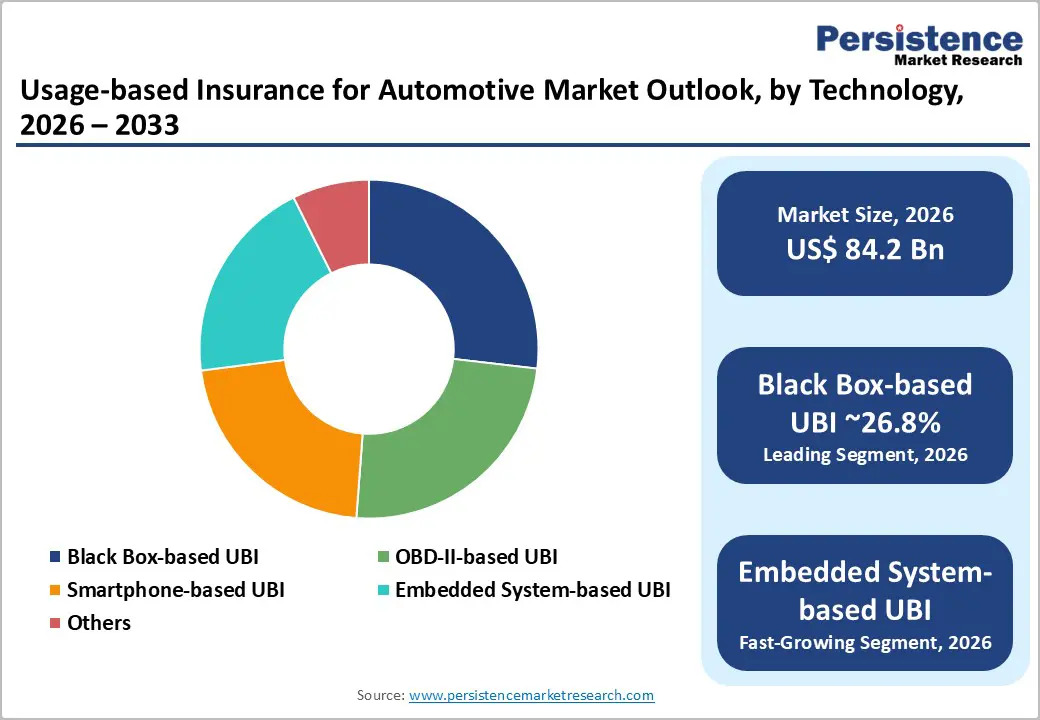
BRENTFORD, LONDON, UNITED KINGDOM, June 24, 2026 /EINPresswire.com/ -- The global usage-based insurance for automotive market is witnessing remarkable growth as insurers increasingly adopt telematics and data-driven pricing models. Usage-based insurance (UBI) enables insurance providers to assess premiums based on actual driving behavior, mileage, and vehicle usage patterns. According to Persistence Market Research, the market is projected to be valued at US$84.2 billion in 2026 and is expected to reach US$316.7 billion by 2033, expanding at a CAGR of 20.8% during the forecast period.
The market is also benefiting from rising demand for fair and transparent insurance pricing models. Passenger vehicles remain the dominant vehicle type, accounting for 72.2% of the market due to their large global vehicle population and increasing integration of connected technologies. Pay-As-You-Drive (PAYD) policies lead the market with a 38.3% share as consumers seek flexible insurance options based on actual vehicle usage. North America remains the leading regional market, supported by advanced telematics infrastructure, strong digital insurance adoption, and a mature automotive ecosystem.
👉 𝐆𝐞𝐭 𝐅𝐫𝐞𝐞 𝐒𝐚𝐦𝐩𝐥𝐞 𝐍𝐨𝐰: https://www.persistencemarketresearch.com/samples/29038
Quick Stats
• Historical Market Value (2020): US$32.9 Bn
• Current Market Value (2026): US$84.2 Bn
• Projected Market Value (2033): US$316.7 Bn
• CAGR (2026-2033): 20.8%
• Incremental Opportunity: US$232.5 Bn
• Leading Region: North America
• Dominant Vehicle Type: Passenger Vehicles (72.2%)
• Top-ranking Policy Type: Pay-As-You-Drive / PAYD (38.3%)
Market Segmentation
By Policy Type
• Pay-As-You-Drive (PAYD)
• Pay-How-You-Drive (PHYD)
• Manage-How-You-Drive (MHYD)
By Technology
• OBD-II-based UBI
• Smartphone-based UBI
• Black Box-based UBI
• Embedded System-based UBI
• Others
By Vehicle Age:
• New Vehicles
• Used Vehicles
By Vehicle Type
• Passenger Vehicles
• Commercial Vehicles
By Region
• North America
• Europe
• East Asia
• South Asia & Oceania
• Latin America
• Middle East & Africa
Report Highlights
• Market Forecast and Trends
• Competitive Intelligence & Share Analysis
• Growth Factors and Challenges
• Strategic Growth Initiatives
• Pricing Analysis & Technology Roadmap
• Future Opportunities and Revenue Pockets
• Market Analysis Tools
👉 𝐑𝐞𝐪𝐮𝐞𝐬𝐭 𝐅𝐨𝐫 𝐂𝐮𝐬𝐭𝐨𝐦𝐢𝐳𝐚𝐭𝐢𝐨𝐧: https://www.persistencemarketresearch.com/request-customization/29038
Regional Insights
North America
North America represents the leading regional market for usage-based insurance for automotive solutions. The region benefits from widespread telematics adoption, advanced digital insurance platforms, and strong consumer awareness regarding personalized insurance products. Insurance companies continue investing in connected technologies to enhance customer engagement and risk management capabilities.
Europe
Europe remains an important market driven by increasing adoption of connected vehicles and growing demand for innovative insurance solutions. Insurance providers are focusing on digital transformation strategies and telematics-based offerings to improve customer retention. The region's mature automotive sector also supports steady demand for usage-based insurance services.
Asia Pacific
Asia Pacific is emerging as a promising market due to rapid vehicle ownership growth and increasing digitalization across the insurance sector. Rising penetration of connected vehicle technologies and mobile-based insurance platforms is creating favorable opportunities. Expanding automotive markets across the region are expected to contribute to future adoption of usage-based insurance programs.
Market Drivers
One of the primary drivers of the usage-based insurance for automotive market is the growing adoption of telematics technology. Insurers can monitor driving behavior, mileage, and vehicle performance in real time, enabling more accurate premium calculations. This data-driven approach benefits both insurers and policyholders by improving risk assessment and promoting safer driving habits.
Another significant growth factor is rising consumer demand for personalized and cost-effective insurance solutions. Traditional insurance models often rely on generalized risk profiles, whereas usage-based insurance provides customized pricing based on actual vehicle usage. This flexibility appeals to consumers seeking fair premium structures and enhanced transparency. As digital insurance platforms continue to evolve, adoption rates are expected to increase further.
Market Opportunities
The market offers substantial opportunities through expanding connected vehicle ecosystems and advancements in telematics technologies. As more vehicles become digitally connected, insurers can develop innovative products tailored to individual driving patterns.
The projected incremental opportunity of US$232.5 billion highlights the significant growth potential within the industry. Increasing smartphone penetration, digital insurance adoption, and growing demand for customer-centric insurance models are expected to support long-term market expansion. Insurers that leverage advanced data analytics and connected technologies are likely to gain competitive advantages in the evolving market landscape.
Companies Covered in Usage-based Insurance for Automotive Market
• Progressive Corporation
• Allstate Insurance Company
• State Farm Mutual Automobile Insurance
• Liberty Mutual Insurance
• AXA S.A.
• Allianz SE
• Assicurazioni Generali S.p.A.
• UNIPOLSAI Assicurazioni S.p.A.
• Aviva PLC
• MAPFRE S.A.
• Aioi Nissay Dowa Insurance Co., Ltd.
• Root Insurance Company
• Metromile Inc.
• Cambridge Mobile Telematics
• Octo Telematics
👉 𝐁𝐮𝐲 𝐍𝐨𝐰: https://www.persistencemarketresearch.com/checkout/29038
FAQ's
➤ What are the main factors influencing the Usage-based Insurance for Automotive Market?
Growing telematics adoption, connected vehicles, and demand for personalized insurance pricing are major growth factors.
➤ Which companies are the major sources in this industry?
Key companies include Progressive Corporation, Allstate Insurance Company, Allianz SE, AXA S.A., and Octo Telematics.
➤ What are the market's opportunities, risks, and general structure?
The market offers opportunities through telematics growth, while data privacy concerns and implementation costs remain key challenges.
➤ Which of the top Usage-based Insurance for Automotive Market companies compare in terms of sales, revenue, and prices?
Major participants include Progressive Corporation, State Farm Mutual Automobile Insurance, Liberty Mutual Insurance, and Aviva PLC.
➤ How are market types and applications and deals, revenue, and value explored?
The market is analyzed by vehicle type, policy type, market value, growth potential, and insurance delivery models.
Future Opportunities and Growth Prospects
The future of the usage-based insurance for automotive market remains highly promising, supported by rapid digital transformation, increasing telematics adoption, and expanding connected vehicle ecosystems. With the market expected to grow from US$84.2 billion in 2026 to US$316.7 billion by 2033, insurers are likely to focus on advanced analytics, customer-centric products, and innovative pricing models to capitalize on emerging growth opportunities.
Explore the Latest Trending Research Reports:
Mining Truck Market
Inboard Engines Market
Persistence Market Research
Persistence Market Research Pvt Ltd
+1 646-878-6329
email us here
Visit us on social media:
LinkedIn
Instagram
Facebook
YouTube
X
Legal Disclaimer:
EIN Presswire provides this news content "as is" without warranty of any kind. We do not accept any responsibility or liability for the accuracy, content, images, videos, licenses, completeness, legality, or reliability of the information contained in this article. If you have any complaints or copyright issues related to this article, kindly contact the author above.
